
.Need for a high ROE and ROCE
As investors, we have a tendency to lay excessive emphasis on earnings per share (EPS) and the price-earnings multiple (P/E). But when you use ratios like ROCE (EBIT divided by assets minus current liabilities) or RoE, you can measure the productivity of capital.
There are some businesses like textiles and paper, which struggle to generate ROCEs higher than 8 per cent. So if a company has a ROCE of 10 per cent and earns Rs 10 of EPS, then it will need an additional investment of Rs 100 in the business to generate an incremental Rs 10 of earnings. So, I as a shareholder will get higher dividends only if the business makes money. In many businesses, it will be difficult even to maintain the growth rate at GDP growth rate level, and such businesses are worthless to me. The risk-free return is 7.5-8 per cent, so I am better off putting my money in the banks.
The best situation for wealth creation occurs when you identify a company which has a low ROCE, say about 10%, which has the potential to improve its ROCE to 40 per cent. When that happens, the EPS grows substantially, and the
P/E is re-rated, so the returns are huge. For example, IPCA Laboratories' RoE shot up from 19% in 2003 to 34% in 2004 and the stock shot up by 5 times in two years. Similarly, Balkrishna Industries had a ROCE of 11% in in 2002, which zoomed to 35 per cent in three years. The stock multiplied 20 times in this period. Mid-caps create more wealth.
In every study over the past decade, we have found that among our wealth-creating companies with a
market cap of less than Rs 250 crore as an aggregate
have grown three times faster than companies with a market cap of over Rs 1000 crore over the next five years. Besides the fact that
smaller companies grow faster than larger companies, there are also other reasons. When companies are small, the market has not recognised their rapid growth rates. Thus, it is possible to identify companies that are likely to grow at 50 per cent but are trading at a P/E of 5 times. Once the market discovers it, the growth rate would have tapered to 20 per cent, but it would be trading at a P/E of 20 times. Mid-caps offer you growth plus P/E re-rating. Yes, mid-caps are riskier than large-caps, but that is where your experience, research and knowledge will help. But the beauty is that even a small investor has serious wealth creation opportunities by finding stocks that go on to become multi-baggers. There is a Chinese saying that goes, “Big fish is not found in clear waters. So, for a good catch of stocks, you have to go to the muddy waters of uncertainty.
Passion for leadership
Wealth creating companies have a passion for leadership in their respective businesses. Though this is not an easy parameter to measure, using market share is useful. Look at the example of Hero Honda, which was a marginal player about 15 years ago, but it came from behind, and grabbed a market share of 50 per cent. ICICI Bank is another recent example. it has become the largest bank in terms of market cap.
A good time to buy stocks is when the company is not a leader, but a marginal player, and then it
displays aggression to become number one or two, and does it. I think that in the cellular services space, we could see one of the smaller players coming from behind, and changing the rules of the game in the future.
Besides de-regulation in India, our companies have the global market as their playing field. Many companies are trying to find their own feet in the global markets, and some of them will become mega corporations over the next decade or so. Focus
We have found that 95-97 per cent of the wealth creating companies have a single line of business, where they excel. As a corollary, these companies
expand in their existing business rather than diversifying into other areas. Look at how Holcim is growing within the same franchise in Gujarat Ambuja and in fact, in ACC, it has divested from unrelated businesses. The benefit of focus is that the incremental cost of production is lower, there is no need to introduce new brands, sales and marketing costs are lower, all of which result in better profitability. Plus, companies gain dominance in their markets. Even
managing people is easier. For the investor, it is easy to invest in a company that has a single line of business. If I have conviction in cement, I am better off investing in a pure cement play rather than a diversified company. Also, markets typically value diversified companies lower than focused companies.
Improving business economics
I will explain this with two personal examples. I bought Birla Corp and Bharti Airtel around three years ago at Rs 30 and Rs 25 respectively, when both were loss-making companies, and today Birla Corp is at Rs 330 and Bharti is at Rs 600. In case of Birla Corp, the economics of the cement business has undergone a complete change. This year, the company will post an EPS of Rs 35, which is higher than my purchase price. Bharti had a small operating margin, high interest and depreciation costs, and was loss-making when I bought it, but after seeing the possible growth and how similar companies had fared in other countries, I was convinced. So, in wealth creating companies, the economics of businesses improves over time. Five-year payback outlook
Typically, we have seen that a high growth business, which is run by an outstanding management and purchased with a five-year pay-back outlook of less than one times has a good chance of being a big winner. What this means is that will the company pay back what you put in over the next five years. This is a valuation metric, though a little tricky. First, people do not look at what will happen over the next five years. So, you have to take a call whether the company will pay back your current purchase price. For example, if a company is trading at a market cap of Rs 1 lakh crore, then the question to ask is will the company pay back that amount over the next five years. If it pays this back, then the expanded residual business becomes free to me. But this is not easy. The Rs 1 lakh crore company is not going to be earning Rs 20,000 crore a year. It will be at Rs 5,000-7,000 crore, and it is likely to have a P/E of 20 or 25. What can be done is that you have to assume a conservative growth rate that you are convinced about and calculate what it will earn in the next five years. Here you can use the PEG ratio (which is the P/E multiple divided by the future growth rate). As long as the PEG multiple is below 0.5 (say a P/E of 20 and growth of 40 per cent), you will be fine. On the other hand, if a company has a P/E ratio of 40 and will grow at 40 per cent, then it will take about eight years to pay back your money. You may make money in this case, but it will not be as good as in the previous case where you buy at a PEG of 0.5.
LEARNING CURVE organised by Ramesh Damani on CNBC TV18 in January 2009
How to spot a multi-bagger?
Ramdeo: Purchase price decides rate of return. hence it is non-negotiable that you buy at absolutely cheap & throwaway valuation, literally free of cost. purchase price should become insignificant
Bhatta:
high quality business. scalable business model without any requirement of linear inputs of capital. and
rational capital allocation. if somebody has great profits but unnecessary capex then cash flow goes for a toss.
management agenda
RJ: price = p/e X e.p.s. if p/e is 5 and eps is 5 price is 25. but if eps becomes 15 and p/e becomes 15 then price becomes 225.
so ask whether EPS can grow annually. p/e expansion is a function of many factors. imp, Size and Liquidity. there are many companies i do not sell bcoz i knw p/e will be re-rated once size reaches critical mass
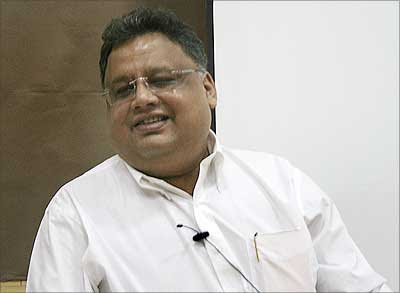
Damani: What are the characteristics of great companies?
Agrawal: A great company, to put very aptly, is like a bank account where you get very high rates of interest, and that is say 55-60%. That is the kind of productivity of capital, which is very high. Once it starts with that, over the years, it keeps increasing. So the entry barrier or competitive advantage or popularity of the product keeps increasing over a period of time, and doesn’t remain static. That is called a great company. So, profits are high and profitability keeps growing over a period of time. That is a great company.
Q: But great companies have to be caught young otherwise they give mediocre returns. For example buying Lever in 1993?
Agrawal: What is important with great companies because the longevity of these companies are perpetual - 50-100 years. What is important is not to buy them young or mature, but to buy them at the right price – at an attractive or reasonable price not at a throwaway price. You will never get it.
So, it is not important to catch them young. Once it is demonstrated that they are great then later it can be made part of the portfolio at any point if you can find them at a reasonable price.
Q: But the fall as such that we have had globally and in India, you would be able to find a lot of great companies now, because stock prices are down 60-80% on average?
Agrawal: The first thing is, great companies are not that many that you can come across every day. There are I would say, out of 500 companies about 50% on tangible assets not on their declared return on networth. There are only 10 companies that are more than 50% return on tangible assets.
So, going by Buffett’s example of See’s Candies, there are only 10 companies that can be today be called as acknowledged great companies. So, all those companies where I have looked at their valuations are definitely much more reasonable than what they used to be 10 years back, but are nowhere at a throwaway price at which we could buy See’s Candies at about 7-8 P/E multiple or 20% earnings on his purchase price. Right now you get dividend at best 3 or 4%. I think the best you can get is – Hero Honda is about 13 times, which is 7-8% earnings yield, and Glaxo at about 5%, HUL at about 4%.
Q: One thing that startled me about the study was that growth is not necessary for a great company, it is the cash flow, it is the dividend, it is the return on equity.
Agrawal: Yes because once you have started a great machine of earnings and dividends because what happens is whatever is earned for example 1,000 crore is earned or 500 crore is earned, it doesn’t need even a penny of that to grow into the future. Even if it grows at 10%, entire 500 crore can be given back to you by way of dividend like Hero Honda. It doesn’t need any capital for growing. So all the profit they make 1200-1300 crore, technically they can pay it out to the shareholders. What more you want, why do you need the growth? The issue is that the extreme of dividend – it literally becomes a growing bond maybe growing at 8-10%. The issue is, are you able to buy it at a reasonable price.
Q: So the trick is to find a great price?
Agrawal: Yes.

Jhunjhunwala: I think the first thing is that there should be huge untapped market because I don’t agree that – See's Candies would be one example out of 1,000 companies which have given great returns to investors I think 999 would have grown. Second thing I feel is that the great companies are very much returned to the capital profile of a company what is the capital investment - the capital investment they need everyday in order to grow their earnings and also their working capital profile because Nestle and Lever have partly been able to get this kind of return on capital employed because they are able to squeeze their suppliers and they are able to sell everything on cash. So the working capital profile.
Secondly, I think that every great company has some kind of a business superiority, it could be a brand - I think in Bharti’s case it is marketing, so there is some kind of a business superiority - from title also it is marketing. So there has to be entry barriers into that business.
See's Candies is selling for forty years because See's Candies has some loyalty from its customers and that loyalty cannot be recreated by another client otherwise there would have been a capital society or where somebody will compete and some will create it.
I always say it is important what you buy and it is not important in what size you buy, so it is not great buying of bond at 25 times earnings 4% yield and I personally feel that maybe it is three-four or five or fifteen-twenty years but India is (one of) those who (would) see humongous growth for the next twenty-five years. So if you pick up some companies who are going to cater to Indian markets and you have some business superiority and you feel available at reasonable valuations, I think this is the opportunity in that time when it is the darkest and everybody is so pessimistic that you get the best investment opportunities.
When I bought Titan, its marketcap was above 125 crore and its debt was 600 crore. Today its turnover will be 4,000 crore this year and its debt will be less than 600 crore and I envisage it everybody is going to buy watch ten years later, everybody is going to buy jewellery and everybody is going to wear these things. So there is going to be huge demand.
So I think this is a real time and it is very easy to read about Mr Warren Buffet and his great accomplishments which undoubtedly are but to find those circumstances in which we can recreate what he has done is extremely dismal because those circumstances will not exist and secondly we don’t have the discipline. What Indian investor lands up doing is buying multinational companies who have the worst corporate governance in this country, Satyam is nothing.
Q: What would you look for in a great company?
Bhattacharya: It is very difficult to add to what they said and to directly address your question, he made this point - we live in a country where growth is bound to be there, why this obsession with growth in a country where nominal GDP is growing at 12.5-13% anyhow and will grow. I think there was and the will there is an interregnum here and that interregnum should not be treated as hanging permanently.
So, I think yes you are right that this year it may not but if you look at a broader sweep of India’s economy- we can argue about the numbers. But I am reasonably sure that this country will have aggregate output growth at something in double digits for the next 10-years, unless something goes seriously wrong, which I simply cannot visualize right now.
Q: Globally also you do not visualize anything wrong?
Bhattacharya: Which affects India- I don’t think that even if America goes into a recessionary environment for the next 3-4 years, and that is much more than what people think right now. People don’t think that it is going to last till 2011-2012 and despite that India will have the ability for a number of reasons, which are very well known- like demographic, domestic, consumption number of things. I see aggregate demand here growing at 12-13%. It is given that it is going to grow at 12-13%; I don’t think there is a need to be obsessed with those. I think the one thing that I would for is cash flow.
To answer your question there must be a tremendous focus on cash flow. I think the lesson of 2008- if I may and have never able to expect it, as well as Mr. Jhunjhunwala would have expressed it but I'll give this a shot is to focus on cash flow rather than newsflow - I think that is the big difference. People I don’t think they have ever looked at cash flow.
I think the other thing, which is very important and I am surprised it hasn’t been brought up so far. But to my mind it has primacy- if you want to buy great companies and being reflective of the Indian investor this is not something important, we keep on paying tribute to Buffet and great investors but we don’t seem to recognize this. It is very important that capital allocation is rationa -- if capital allocation is irrational; then no matter how good the business, no matter how much cash flow it generates, it is not going to be a great investment.
I don’t want to get into specifics but there is a business in this country; it is a fabulous business, first in the country to get into it, absolute money machine, doesn’t require any incremental capital employed, had a great start, they generate a large amount of free cash flow but they just blow it up. They buy fixed assets, they buy a building for themselves to live in rather than rent it. They invest in bonds and debentures, they find ways to deal with the cash flow rather than pay dividend and that is what has prevented that company from achieving great business. It has greatness thrust upon it but could not get there.
Q: A stock you have often mentioned – Bharti – good, great or gruesome?
Agarwal: It’s at the high end of good and yet it hasn’t achieved greatness, because they have not paid a single penny, yet. There is huge cash flow; operating cash flow is more like 15-20%. But they have huge capital expenditure ahead and it’s a debt free company. In fact take pride that they don’t pay dividend so.
Q: Telecom same business, Bharti becomes a great company and TTML you say is a gruesome business why?
Agarwal: TTML is a gruesome company, the underlying business is mobility and both of them have same business underlying.
Q: What did TTML do wrong?
Agarwal: We have seen it all in the last five years. But they missed the first mover advantage, they got into wrong technology.
Jhunjhunwala: Bharti paid no price for the Delhi license. They paid a heavy price for the Bombay license.
Agarwal: TTML has only one circle which is very limited access which is Maharashtra and Goa, so they have very limited access and they have Sigma which is a handicap technology at least to start with. So everything went wrong with that company and this business requires a lot of capital, they kept on pumping capital and one good thing is that they had the Tata name.
Jhunjhunwala: So it was a bad thing that they would go and keep pumping capital. Putting good money on a bad thing.
Agarwal: They are so nice that they kept pumping capital we were so good that when they asked for a rights issue at Rs 21, we again gave them. So instead of getting dividends, we have been giving them money. And I wished them all the best.
Q: The macroeconomic environment in India is improving considerably, isn’t it?
Jhunjhunwala: Improving? I don’t know maybe next year there will be no oil subsidy, I don’t know what the government is saying. As per my calculations if today Oil is 45/bbl, Indian Basket is 40/bbl, oil companies today are making a profit after providing for subsidy of at least Rs 50,000 crore at 47 to the dollar. What was said in June that there was a loss of Rs 2.45 lakh crore. So, Rs 3 lakh crore is going to come in, this country is going to be saved, this has such consequential effects, sulphur has gone from USD 800 to USD 90. I don’t think there will be a fertilizer subsidy more than what they have provided for in the budget in this year.
Cumulatively they estimated at the peak fertilizer and fuel subsidy was going to be about 3 lakh and eight thousand crore. Next year it maybe not needed at all. This will have a very big effect on the value of the rupee, on government finances, it will have a very big effect on liquidity because someone in the country had to pay this 3 lakh eighty thousand crore. The government may not have included in the budget but IOC had to get that money from somebody, if they don’t get from government bonds then from government banks. So if you don’t pay out Rs 3 lakh eighty thousand crore out of this country what will happen to the liquidity?
After that there are interest rates, one thing is that you have reduced excise duty across the board by 4%, commodity prices have halved. If I say that commodity prices constitute 50% of every product sold in this country, even if you pass on 40% of the benefit that is going to come to the producers, if commodity prices will sustain you will see a reduction in prices between 20-25%. And no manufacturer in his right mind today is going to look at volumes, at price he is going to look at volumes. After that if interest rates crash and I am buying an asset with interest rates, it will give me a cushion of 5-7% to 10% over the life of the asset in any asset that I buy. This is not Japan nor is it America.
Q: This is not a corporate holiday for profits. If commodity prices, interest costs going down why should there be a holiday for corporate profits?
Agarwal: I am not talking about individual group of companies. In aggregate, when you talk about India Inc, in 2003 the India Inc made – I am talking about all listed companies –about Rs 30,000 crore. In 2007-08, they made 3 lakh 11 thousand crore on a GDP of about Rs 40 lakh crore. This year say Tisco made a profit of about 10,000 crore, last quarter itself they made about Rs 5,000 crore. To replace Rs 10,000 crore you need many midsize companies.
Jhunjhunwala: In your study for earnings growth, you said you had 17% compounded growth over the last 15 years. But you have 12% normalised GDP growth. So to expect the corporate sector not to have growth of more than 5% and in between you have to exclude the companies who have been newly listed. In 1993, ONGC was not listed; today ONGC’s profits are Rs 15-20,000 crore. So as a percentage of GDP the profits have also gone up because of the newly listed companies. So the profit growth that we have had over a period of time has not been anything out of the extraordinary. When you have 12% normal GDP growth and it is the efficient and large companies which are listed. So I don’t think it is anything exemplary which is not sustainable.
Agarwal: 17% is not a problem but in the last five years you had more than 25% of earnings growth for the entire India Inc, 10 times in 5 years, at aggregate level. I am not disputing what Titan can do.
Q: Commodity prices are going down; globally we are heading into deflation – what are the risks of that?
Bhattacharya: I don’t think that people will produce oil if it stays at USD 25 per barrel. I don’t know why it is taken for granted that oil will remain at this price for ever.
Q: Because Saudi Arabia and Venezuela need money to finance their own budgets?
Bhattacharya: But it is cartel.
Q: And cartel as we know has never worked.
Bhattacharya: But in oil if the OPEC decides for some reason and this is a recessionary environment, the demand for oil is coming down and let’s not forget that United States of America is the largest…
Jhunjhunwala: But no one is predicting. 88 million barrels is the daily consumption and they are going to cut 4 million, no one is predicting a fall of more than one million next year. So it’s peculiar we don’t know anything of the commodity market we should ask the Mr. Jim Rogers, he knows best.
Bhattacharya: I think all predictions are a complete waste of time, neither of us knows what is going to happen in the next 6 months. So I don’t think we should get too carried away with forecasting. The value of forecasting is mainly to provide entertainment which is the part of the reason we are here but I don’t think we should get carried away with the idea of forecasting.
Mr Agrawal has a very valid point and this is proven across economies, across the world, across economic environment there is mean reversion in corporate profits. This is a truth, nothing grows to the sky. If profits are grown at 25% for the last 5 years and taking Jhunjhunwala’s point if that they can grow at 17-18% because you have a nominal GDP growth of 12%, that 25% to grow for 25 years we will have to have a period when it grows at 5% for the next 5 years and that is the period we are unfortunately looking at because they have grown 25% in the last five years. So its like heads and tails, it is very unlikely though you can have it..
Q: Are you predicting?
Bhattacharya: No, not predicting I am pointing out something that people learn in statistics which sadly in this country people have not had much exposure to, useful statistics. You can have 10 heads in a row equally you can have 10 tails in a row but the distribution of heads and tails, suggest that those are outliers, so we shouldn’t bank on outliers to make our judgment come right.
Q: So flip a coin since you don’t like prediction - 7,700 on Sensex will hold?
Bhattacharya: I think that is completely irrelevant to what you need to do today.
Q: Which is what?
Bhattacharya: Basically buy, There are bunch of really high quality companies and even Rakesh has made this point, a bunch of really good companies available at very attractive prices, unless you are thinking about next 3 months what is the scare about buying these companies? If you have a 12-18 to 24 month outlook, you can buy high quality, really great businesses. And I will get to the level because I am no where near greatness, so I will talk about less great companies which are available at stunning prices. Take a company like Blue Star it is available at a stunning price in relation to what it has done - contracting, project, core air conditioning, heating etc it has compounded seven years return on capital employed of 37%, it has grown profits in excess of 27%. It has never had in the last 10 years a year in which absolute profits have grown and there has been no dilution in the last 10 years.
Q: Just for disclosure of Sebi you have an ownership?
Bhattacharya: Yes I do have a ownership.
Q: Will 7,700 on Sensex hold?
Jhunjhunwala: I don’t know about 7,700 because if commodities dip, we have very high weightage for the commodities but I think the broad market is going to hold and that is what the bond market is showing for the simple reason that I have never seen such pessimism in my life, I have never seen such depression in my life.
Q: Have you seen such optimism like we saw in January?
Jhunjhunwala: I have seen the 1992s one – this one is nothing. In 1992 it was worse. 1992 was 60 times earnings and fortunately there was no scam this time. That was the only difference. There optimism in 2001 – McKenzie said Indian software industry will grow 100%. Infosys profits will double every year. I have never seen such kind of optimism. I don’t think we are anywhere near that kind of optimism and the Indian economy and India as a nation and we as a market had far greater places for this bull market in 2008 although there was a lot of excesses then what we had in 2000 or 1992.
Q: 50 Indians own 40% of the GDP – that’s pretty optimistic in terms of valuation. But your call is 7700 will hold – that’s what you said in your study?
Agarwal: I am pretty certain to the extent that’s why I have put the word probably because still one could be wrong 5-10% but 90% probably 7700 as a bottom.
Q: Is that generally in historical terms – great periods of wealth creation are followed by wealth destruction?
Agarwal: This has been characteristic of Indian stock market. I though a year or two back that this particular bull market is the first bull market led by earnings growth. So the foundations are solid. But again the story is the same because this time though you have solid earnings but the PE multiple came back all the way down from 30 to 10. The masses look at the price and not the value and that’s where the problem is.
Jhunjhunwala: People talk about deflation, lower inflation – they compare us with Japan, America, and Europe – they’re all over 80s, we have just had puberty, we are young economy. Here my driver if he gets something cheaper, he increases the amount of shirts he buys or he increases the amount of foods he eats. So price deflation in India according to me is going to be a big spur to consumption. One of problem
Q: Jim Rogers was quoted on television saying that equities is going to be an impaired asset class over the next 5-10 years. What would you say to that?
Bhattacharya: I think he was referring to the western world. But I read Mr. Rogers’ comments in the light of what is happening in Western Europe and America because there your fundamental problem is that demand has been seriously impaired. The ability to stimulate demand is the challenge.
Q: So, India will be an island?
Bhattacharya: I don’t think we’ll be an island. But I think what is very important, very fundamental and I would say it applies to large parts of Asia – I wouldn’t say even India – I would venture to say there are many countries in Asia and that includes countries like China, Korea, I think what is going to happen is that increasingly we are going to see these countries become far more competitive in terms of their abilities to displace other manufacturers and providers of services. That increased competitiveness is what is going to lead eventually to a change in the way that these companies prosper in terms of their corporate profit, in terms of their ability to gain dominant positions and eventually the way they are valued.
--------------------------------------------------------------------------------------
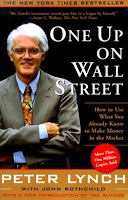
just read this nice book. some interesting points covered in the book:
--------------------------------------------------------------------------------------------
is buying Bonds really so safe ? Own a house before you own a lot of stocks. because you can leverage with a home loan plus get tax exemption.
Is this a good market? nobody can predict the markets. there are 10,000 economists that try to predict markets based on economic fundamentals but nobody could ever guess tops & bottoms.
Don't try to predict markets. just buy great companies at great prices.
Peter Lynch cocktail party theory:
cardinal rule of Fund managers - you'll never lose your job for losing your client's money in IBM stock.
Fund managers are always looking for reasons to Not buy a stock. typical eg "it's too small" or "no track record". this way they can cover their face if the stock outperforms.
Fund managers spend a quarter of their working life jusifying why they bought a stock.
The advantages of dumb money - simple power of common sense. hence stop listening to professionals.
You get 10-baggers mostly in a weak/ depressed/ bear market, and 10-baggers need not be penny stocks or small caps. There should be little institutional ownership.
If 50 analysts track it, 20 funds own it and the CEO is making headlines, that's typically Not your potential multi-bagger.
Don't buy the stock if u don't understand their product. no matter how Hot it is.
In cyclicals, keep a hawk eye on the inventories and commodity prices.
When to sell a multi-bagger? when 60% is owned by institutional investors and the CEO makes it to the cover of 4 national magazines.
The biggest problem with stock market advice, whether good or bad, it sticks in your brain and you tend to react to at at some point in your investing life. so don't ask everyone for advice.

NIKE Inc.(Portland, Oregon) is the largest seller of athletic footwear and athletic apparel in the world.
- 16 billion revenues with 45% gross margins and 10% Net margin
The company was founded in 1964 as Blue Ribbon Sports partnership by Bill Bowerman and Philip Knight and became Nike Inc in 1978. Nike means greed goddess of victory. Bowerman experimented with improvements in athletic footwear design while Knight managed the business end of the partnership. Bill Bowerman died at the age of 88 in Christmas of 1999.

Philip Knight, a Stanford graduatehas 35% stake which is worth $ 10 billion (Rs 40,000 crores)
- 90 Nike factory stores in US
- 85 Cole Haan stores in US
presence in 160 countries (52%)
- 27,000 retail outlets outside US
- 21 distribution centres in Europe, Asia, Aus, Canada, Africa
Segment revenue
US – $ 7.5 billion
Europe – $ 5 billion
Asia -$ 3 billion
Virtually all of the footwear is produced outside of the United States by contract suppliers in
It also hasmanufacturing agreements with independent factories in Argentina, Brazil, India, Italy, and South Africa to manufacture footwear for sale primarily within those countries.
The principal materials used in our footwear products are natural and synthetic rubber, plastic compounds, foam cushioning materials, nylon, leather, canvas and polyurethane films used to make Air-Sole cushioning components. NIKE IHM, Inc. and NIKE (Suzhou) Sports Company, Ltd., wholly-owned subsidiaries of NIKE, are largest suppliers of the Air-Sole cushioning components used in footwear.
NIKE has an exclusive, worldwide license to make and sell footwear using patented “Air” technology. The process utilizes pressurized gas encapsulated in polyurethane. Some of the early NIKE AIR® patents have expired, which may enable competitors to use certain types of similar technology.
Most of this apparel production occurred in Bangladesh, China, India, Indonesia, Malaysia,Thailand, Turkey and Vietnam.
The principal materials used in the apparel products are natural and synthetic fabrics and threads, plastic and metal hardware, and specialized performance fabrics designed to repel rain, retain heat, or efficiently transport body moisture.
Sojitz Corporation of America (“Sojitz America”) and its predecessor,Nissho Iwai Corporation, a large Japanese trading company, performs significant financing services
The biggest problem faced by Nike in marketing products is the WTO laws.
From 1994 through January 1, 2005, the European Union (“EU”) imposed limits (or “quotas”) on the import of certain types of footwear manufactured in China. Footwear designed for use in sporting activities, meeting certain technical criteria and having a CIF (cost, insurance and freight) price above nine euros (“Special Technology Athletic Footwear” or “STAF”), was excluded from the quotas. As a result of the STAF exclusion, and the amount of quota made available to Nike, the quotas did not have a material effect on their business.
As part of China’s 2001 accession to the World Trade Organization (“WTO”), China entered into an agreement with the EU and other WTO members to abide by a special safeguard arrangement whereby quotas could be imposed on any product sourced in China, including footwear, if there was a surge in imports from China into another WTO country, and after a legal proceeding it was determined that such imports were injuring a domestic producer. with the phase-out of the quotas at the beginning of 2005, and the expiration of a separate EU anti-dumping case in 2003 against footwear made in China, Indonesia, and Thailand, there has been renewed pressure from some parts of the EU footwear manufacturing sector to re-impose some level of trade protection on imported footwear from China, India, Vietnam, and other exporting countries.
In July 2005, the European Commission, at the request of the European domestic footwear industry, initiated investigations into leather footwear imported from China and Vietnam. NIKE and all other major athletic footwear manufacturers participated actively as respondents in this investigation and took a position that athletic footwear (i) should not be within the product scope of this investigation and (ii) does not meet the legal requirements of injury and price in an anti-dumping investigation.
The EU agreed on provisional anti-dumping duties in March 2006 but excluded STAF from the measures.


